 Blackbox for Vision ProCustom gestures, room-aware hints and materials for a Vision Pro launch game, made in a small team led by Ryan McLeod.RealityKitSwiftARKitView case study
Interaction design · Spatial computing
Scissorhands
Recognising a deliberate gesture without asking the player to hold a perfect pose.
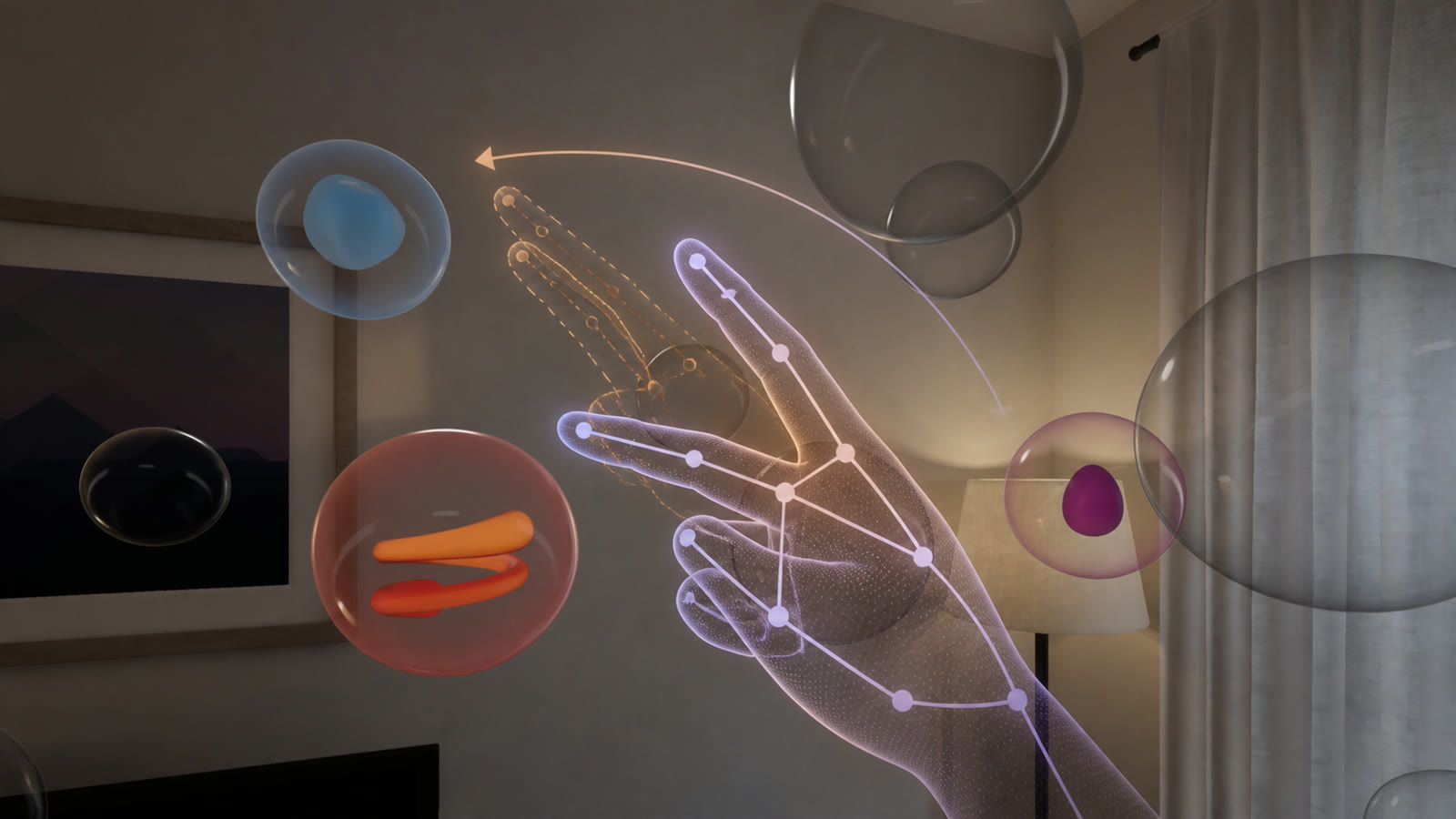
A pair of scissors is easy to imitate with two fingers. Tracking that pose while someone uses it was harder.
In Blackbox for Vision Pro, the hand could rotate so that one finger hid another. In our tests, the estimated positions of hidden joints sometimes moved towards a relaxed hand even while the player was still making the gesture. The input looked less certain at exactly the point where the player expected to cut.
Start and continue are different questions
A false activation matters before the player has chosen to use scissors. I wanted a clear initial pose so an unrelated hand movement would not start the interaction.
After that, the context changes. The player has deliberately made the scissors, and the puzzle expects cutting. Dropping the interaction because of an imperfect frame becomes more disruptive than accepting a slightly loose continuation.
I used a stronger activation condition and a more forgiving active state. I also examined which finger information was useful to follow as the hand turned, rather than giving every noisy joint the same importance.
Use the evidence already available
This did not make the hand data more accurate. It changed how the game interpreted it. The current puzzle and the player's recent action supplied information that a frame-by-frame pose test ignored.
The hand could still look like scissors to a person while the tracked estimate had become less clear.
Match the cost of the mistake
There is a limit to being forgiving. An interaction that never releases would also be wrong. The decision was to make continuation more tolerant, not to assume scissors forever after one valid gesture.
For this puzzle, recognising the player's intention produced a better interaction than repeatedly insisting on a clean pose. I think the distinction is useful well beyond hand tracking: entering a mode and staying in it often need different evidence.
Related project
See the work behind this post.
Blackbox for Vision ProCustom gestures, room-aware hints and materials for a Vision Pro launch game, made in a small team led by Ryan McLeod.RealityKitSwiftARKitView case study