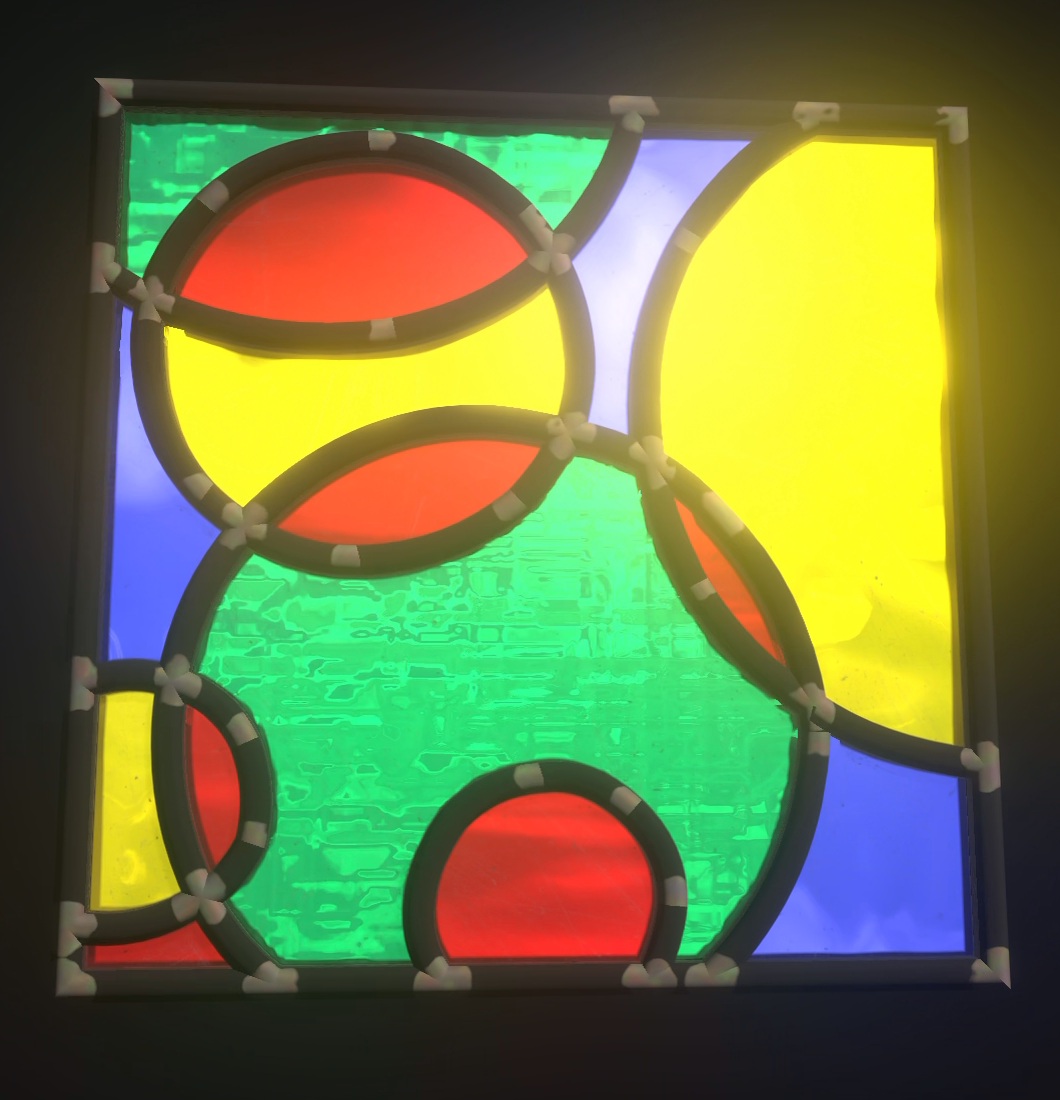
 GLASSA stained-glass puzzle game with a tactile editor, a responsive musical score and a custom C++ geometry system.GodotGDScriptC++View case study
Games
A Quiet Game in a Noisy Hall
Showing GLASS at EGX changed how I thought about its pace.
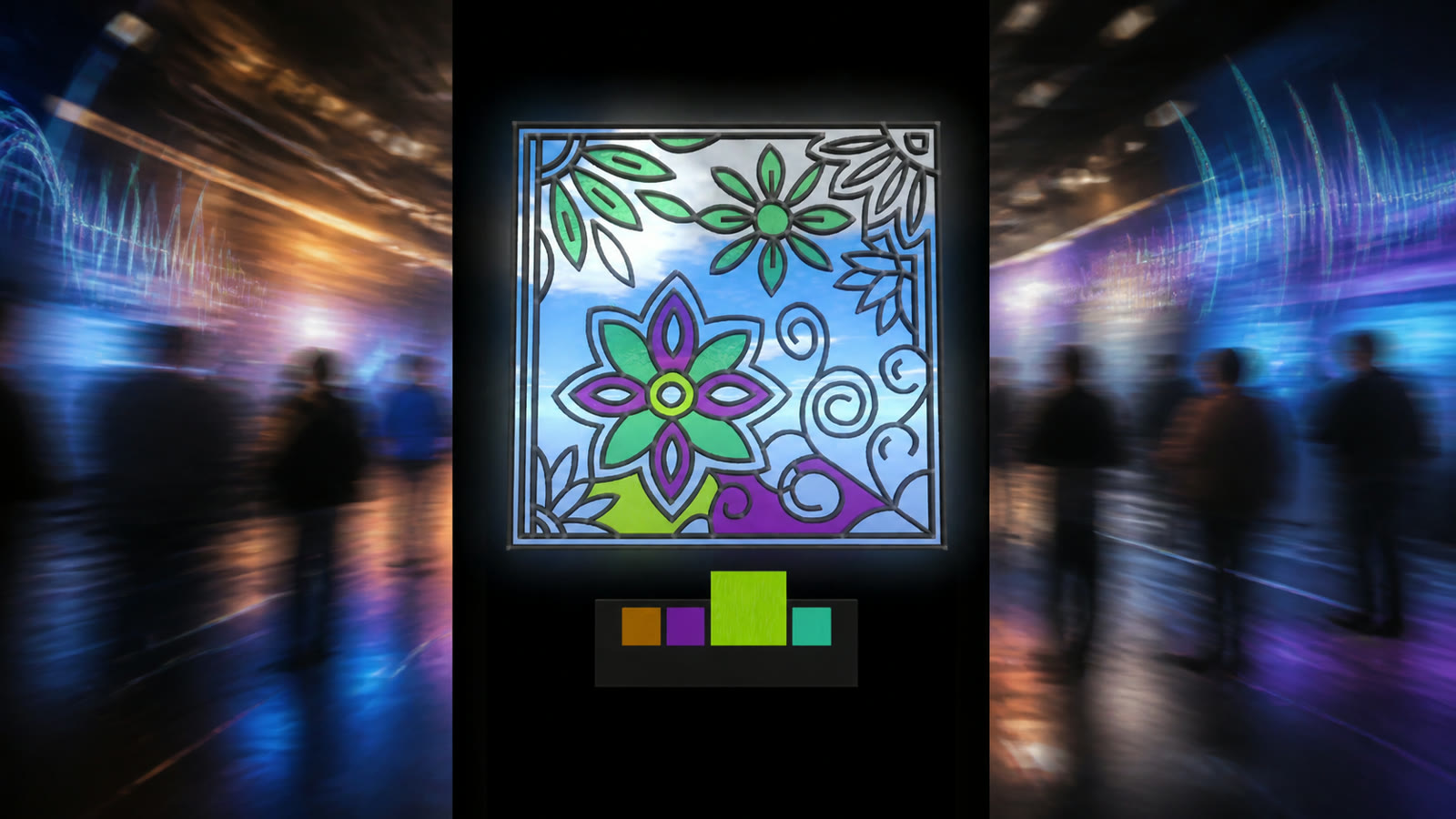
For GLASS's appearance in the Leftfield Collection at EGX, I had some of the game's windows made as physical stained-glass pieces. They were lit from behind around the playable build.
I like the photographs of that stand because they put the two versions together: a window on the screen and an object catching real light beside it.
The strongest feedback was about how the game felt. People kept calling it relaxing. That was striking in an exhibition hall, with plenty happening around them.
Stop arguing with that response
I had tried versions with more pressure, including timed play. They gave the game an obvious source of drama, but the people playing were describing a different pleasure: spending time with a window and gradually colouring it.
That changed the decisions I made afterwards. I began pulling more of the game towards calm rather than trying to balance that feeling against a timer. The pace, feedback and musical score needed to support one another.
Those prototype images belong to the history of the game. They are not a list of promised modes in the current release.
Keep the response useful
This was public playtesting, not a controlled study. I did not come away with a percentage proving that one direction was better. I came away with a repeated description of the experience, and enough encounters to take it seriously.
My brother's musical score now develops in layers, with small responses to mistakes and progress. The game still asks you to solve a puzzle. It does not need to make you hurry to give the solution a feeling of completion.
The physical windows also stayed useful as reference. They helped connect the material I was programming with something I could hold, light and look through.
Related project
See the work behind this post.
GLASSA stained-glass puzzle game with a tactile editor, a responsive musical score and a custom C++ geometry system.GodotGDScriptC++View case study